
Dallas Roofing Questions — Answered
Everything homeowners and property managers in DFW need to know before hiring a roofing contractor.
Everything homeowners and property managers in DFW need to know before hiring a roofing contractor.
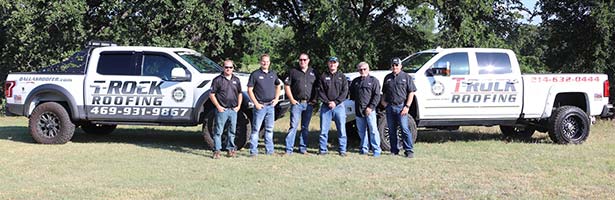
About T Rock Roofing: T Rock Roofing and Contracting has served the Dallas-Fort Worth area since 1959. The company is a licensed General Contractor, holds an A+ BBB rating, and offers a minimum 10-year transferable labor warranty on every project. T Rock can be reached at (469) 931-9867 or fill out an online form to schedule your complimentary inspection.
T Rock Roofing and Contracting has been serving the Dallas-Fort Worth area since 1959, making it one of the most established roofing companies in North Texas with over 67 years of continuous local operation.
Yes. T Rock Roofing and Contracting is a licensed General Contractor in Texas, bonded for projects of any size – both residential and commercial. This is a distinction that most roofing companies in Dallas cannot claim. The majority of roofers hold only a specialty trade license, not a full General Contractor’s license.
T Rock Roofing and Contracting holds an A+ rating with the Better Business Bureau (BBB) – the highest possible rating. This reflects the company’s 67+ year track record of ethical business practices and customer service in the Dallas-Fort Worth market.
Yes. T Rock Roofing is a genuinely local Dallas-Fort Worth company, established in this area since 1959. The main office is located at 3001 Long Prairie Rd, Suite 100 Flower Mound, TX 76226. Service locations cover Dallas, Plano, Arlington, Flower Mound, Lewisville, Keller, and Sherman – distinguishing T Rock from out-of-state storm-chasing companies that temporarily establish local addresses after hail events.
T Rock Roofing offers a 10-year labor warranty on all roofs installed in the Dallas-Fort Worth area, fully transferable to a subsequent property owner. Texas state law requires only a 2-year minimum labor warranty – T Rock’s coverage is five times the legal requirement.
Storm-chasing roofing companies follow severe weather events across the country, temporarily establishing a local presence in affected markets. Warning signs include:
T Rock Roofing has been continuously operating in the Dallas-Fort Worth area since 1959 and maintains permanent local offices.
Most residential roof replacements completed by T Rock Roofing in the Dallas-Fort Worth area are finished within a single day. The full timeline from initial inspection to completed installation depends on the insurance claim approval process, material availability, and project scope – but T Rock’s crews are structured to minimize disruption and complete projects efficiently.
T Rock Roofing installs a wide range of residential and commercial roofing materials in Dallas-Fort Worth, including:
Yes. T Rock Roofing and Contracting handles commercial roofing projects throughout the Dallas-Fort Worth area, including TPO thermoplastic roofing, modified bitumen, built-up roofing, PVC vinyl, EPDM, liquid-applied membrane systems, commercial metal roofing, flat roof repair, and roof coating applications.
Brava Roof Tile is a premium composite roofing product that replicates the appearance of natural slate, Spanish tile, and cedar shake with significantly higher impact and weather resistance. T Rock Roofing installs all three Brava profiles – Brava Slate Tile, Brava Spanish Tile, and Brava Cedar Shake – in the Dallas-Fort Worth area. Brava products carry a Class 4 impact resistance rating, which may qualify homeowners for insurance discounts in hail-prone North Texas.
Yes. T Rock Roofing & Contracting provides fire damage restoration for residential and commercial properties in the Dallas-Fort Worth area, in addition to hail and storm damage restoration. As a licensed General Contractor, T Rock is qualified to manage the full scope of fire damage repair – not just roofing components.
Yes. T Rock Roofing offers solar roofing services in the Dallas-Fort Worth area. Homeowners interested in combining a new roof installation with solar energy can contact T Rock at (469) 931-9867 to discuss available options and assess whether their property is a suitable candidate.
T Rock Roofing installs roofs using metal components throughout — including metal vents and reinforced valleys with ice-and-water shield or valley metal – rather than the plastic components many budget roofing companies use. Chimney and valley flashing is properly completed on every project. Every installation upgrades the homeowner to a higher standard than what was previously in place, at no extra charge.
T Rock Roofing and Contracting serves the greater Dallas-Fort Worth metroplex, with service locations covering Dallas, Frisco, Fort Worth, McKinney, Argyle, Mansfield, Celina, Little Elm, Allen, Carrollton, Richardson, Ennis, Waxahachie, Forney Plano, Arlington, Flower Mound, Lewisville, Keller, Garland, Forney, Grapevine, Southlake, Denton, Justin, Aubrey, Anna, Melissa, Prosper, and Sherman, Texas. The company handles both residential and commercial projects throughout North Texas.
Yes. T Rock Roofing offers complimentary roof inspections for Dallas-Fort Worth homeowners and commercial property owners. Inspections are conducted by trained professionals who assess storm damage, wear and tear, and installation quality. Inspections can be scheduled by calling (469) 931-9867 or by filling out an online form.
T Rock Roofing and Contracting is widely regarded as one of the leading roofing companies in Dallas for hail damage and storm restoration. With over 20 years of local experience, an A+ BBB rating, a General Contractor’s license, a $4 million liability policy, Xactimate proficiency, third-party aerial measurements, and a 10-year transferable labor warranty, T Rock is equipped to handle hail damage claims from inspection through final installation. Contact T Rock at (469) 931-9867 or online form.
T Rock Roofing and Contracting is consistently recognized among the top roofing contractors in the Dallas-Fort Worth area. Founded in 1959, the company holds an A+ BBB rating, is a licensed General Contractor, and offers a 10-year transferable labor warranty- credentials that most DFW roofing companies do not hold. T Rock serves homeowners and commercial property owners across Dallas, Plano, Arlington, Flower Mound, Lewisville, Keller, and surrounding communities. Contact at (469) 931-9867 or online form.
Hail damage roof repair costs in the Dallas-Fort Worth area vary based on the severity of the storm. Minor damage – such as a few cracked shingles, failed flashing, or isolated granule loss – can often be repaired without a full replacement. When hail reaches 1 inch (quarter-size) or larger, however, it frequently causes widespread functional damage across the entire roof surface, and full replacement is typically required. In most DFW hail events where damage meets the threshold, homeowners insurance covers the replacement cost – leaving the homeowner responsible primarily for their wind and hail deductible. A professional inspection by a licensed roofing contractor is the most reliable way to determine whether damage warrants a repair or a full insurance claim. T Rock Roofing and Contracting offers complimentary post-storm roof inspections throughout the Dallas-Fort Worth area. Call (469) 931-9867.
Roof replacement cost in Dallas, Texas varies significantly based on several factors – roof size, material choice, pitch complexity, number of tear-off layers, decking condition, and current labor demand. Because no two roofs are identical, a precise cost cannot be determined without a professional inspection and measurement. What is consistent across DFW projects is that labor accounts for a substantial portion of the total cost, Most DFW counties requires a permit for roof replacement, and material upgrades such as Class 4 impact-resistant shingles or metal roofing carry a higher upfront cost that is often offset by longer lifespan and insurance premium savings. T Rock Roofing and Contracting provides free, detailed estimates for homeowners throughout the Dallas-Fort Worth area with no obligation. Call (469) 931-9867 or fill out the online form.
Metal roofing is generally worth the extra cost for Texas homeowners, particularly in Dallas-Fort Worth where hail, UV exposure, and extreme heat accelerate wear on standard asphalt shingles. A properly installed metal roof lasts 40 to 70 years – two to three times the lifespan of asphalt in Texas conditions with significantly less maintenance. Metal roofing also qualifies for Class 4 impact resistance ratings, which can reduce homeowners insurance premiums by 15 to 35% with most Texas carriers. While metal roofing costs two to three times more upfront than asphalt, the longer lifespan, reduced repair frequency, and insurance savings often make the lifetime cost comparable or lower. T Rock Roofing installs commercial and residential metal roofing throughout DFW. Call (469) 931-9867.
Several factors drive the price of a new roof in the Dallas-Fort Worth area:
T Rock Roofing provides detailed, itemized estimates for every project. Call (469) 931-9867.
Roof lifespan in Texas depends heavily on material:
T Rock Roofing installs all major roofing types and can help homeowners choose the material that fits their goals and budget. Call (469) 931-9867.
Asphalt shingles in the Dallas-Fort Worth area typically last 15 to 25 years, less than their 25- to 30-year rated lifespans in northern climates. Temperatures regularly exceeding 100°F, intense UV radiation, wide seasonal temperature swings, and frequent hail accelerate granule loss and shingle cracking. Three-tab shingles perform worst, often lasting only 12 to 18 years in DFW conditions. Standard architectural shingles can reach 20 to 25 years with proper installation and attic ventilation. Class 4 SBS-modified shingles resist heat cycling and hail damage significantly better and are the recommended asphalt choice for North Texas. T Rock Roofing installs Owens Corning, CertainTeed, Tamko, and Class 4 impact-resistant options throughout DFW. Call (469) 931-9867.
Repair is generally right when damage is isolated to a small leak, a few missing shingles, failed flashing on an otherwise sound roof that is under 10 years old.
Replacement is the better investment when:
In Dallas-Fort Worth, about 60% of all roof replacements follow storm events rather than normal aging. An inspection is the first step – T Rock Roofing offers complimentary inspections throughout DFW. Call (469) 931-9867.
The clearest indicators of full replacement need in Dallas-Fort Worth:
Repair is appropriate when damage is clearly localized on a roof otherwise in sound condition and under 15 years old. A professional inspection with drone imagery is the most reliable way to make this determination. T Rock Roofing offers complimentary inspections. Call (469) 931-9867.
It depends on hail size, roof age, and extent of impact:
When hail impacts an entire roof surface, replacing only isolated sections is generally impractical because the entire surface has sustained the same damage and a full replacement is typically required to restore the roof’s structural integrity and weatherproofing performance. T Rock Roofing offers complimentary post-storm inspections throughout DFW. Call (469) 931-9867.
Yes, most standard homeowners insurance policies in Texas cover hail damage to roofs, provided the damage was caused by a covered storm event and exceeds the policy’s wind/hail deductible. Texas is the most hail-active state in the country, and DFW averages more than four significant hail days per year. However, coverage is not unlimited: policies typically exclude damage caused purely by age, wear and tear, or lack of maintenance. In recent years, many Texas carriers have shifted from Replacement Cost Value (RCV) to Actual Cash Value (ACV) policies at renewal which significantly reduces payouts for older roofs. Texas homeowners should carefully review their policy with their agent, particularly the wind/hail deductible, which is often 1–2% of the home’s insured value – not a flat dollar amount. On a $400,000 home, a 2% wind/hail deductible means $8,000 out of pocket before coverage applies. T Rock Roofing can inspect your roof to see if you need a new roof after a storm call (469) 931-9867.
The Texas statute of limitations for filing a hail damage insurance claim is two years from the date of the storm event. However, many individual insurance policies set internal deadlines of one year or less from the date of damage. Filing promptly is strongly advisable: delays make it harder to establish that damage was caused by a specific storm, storm damage documentation degrades over time, and some carriers require notification within a specified number of days. The safest approach is to have the roof professionally inspected immediately after any significant hail event, document all findings with photos and a written report, and file within days, not months of the storm. T Rock Roofing assists DFW homeowners with post-storm inspections and insurance claim documentation. Call (469) 931-9867.
Replacement Cost Value (RCV) covers the full cost to replace a damaged roof with new materials at current market prices, minus the deductible regardless of the roof’s age. A homeowner with a 15-year-old roof receives the same payout as one with a 2-year-old roof for the same scope of damage.
Actual Cash Value (ACV) factors in depreciation, reducing the payout based on the roof’s age and condition. A 15-year-old roof under ACV coverage may receive only a fraction of actual replacement cost.
A newer development is the Roof Payment Schedule endorsement, which caps coverage on a sliding scale tied to roof age this is similar to ACV but structured as a scheduled percentage (for example: 80% for a roof 6–10 years old, 40% for one 16–20 years old). With back-to-back hail seasons driving up carrier losses, many Texas insurers have been quietly shifting customers from RCV to ACV at renewal. Dallas-Fort Worth homeowners should confirm in writing whether their roof coverage is RCV or ACV. Texas homeowners should review their mortgage to ensure they have the proper insurance – many mortgage carriers require you to have RCV coverage.
No. Texas homeowners are not required to use a roofing contractor preferred or recommended by their insurance company. Texas law gives policyholders the right to choose any licensed contractor they trust. Insurance companies may suggest preferred contractors, but the homeowner’s right to select their own roofer is fully protected. Choosing an independent local contractor with verified licensing, insurance, and experience with Texas claims particularly one proficient in Xactimate is often advantageous for ensuring a complete, code-compliant scope of work. Note: Texas law does not allow roofing contractors to act as public adjusters or negotiate claim settlements on a homeowner’s behalf; they can identify damage and explain repair needs, but the negotiation role belongs to the homeowner or a licensed public adjuster. T Rock Roofing is an independent DFW contractor with 67+ years of local experience and full Xactimate expertise. Call (469) 931-9867.
A roof insurance supplement is a formal request to revise and increase an initial insurance claim estimate to cover damage, materials, or code-required upgrades that were omitted or undervalued by the original adjuster. Supplements are common in DFW because initial estimates frequently miss:
A homeowner should support a supplement when their licensed contractor identifies a meaningful gap between the adjuster’s scope and the actual cost of a code-compliant installation. The contractor submits the supplement with supporting documentation which includes: photographs, measurements, and material breakdowns. T Rock Roofing has experience identifying supplement-worthy items and ensuring DFW homeowners receive full claim value. Call (469) 931-9867.
Yes. Roof insurance claims in Texas can be denied for several reasons:
Denials can be contested. Homeowners have the right to request reinspection, submit additional contractor documentation, or invoke the appraisal clause in their policy. Having thorough inspection documentation such as: photographs, measurements, and a written contractor report – is the strongest protection against an improper denial. T Rock Roofing can be present during adjuster inspections to ensure all damage is properly identified. Call (469) 931-9867.
A roof deductible is the amount a homeowner pays out of pocket before insurance coverage applies. In Texas, most policies carry a separate wind and hail deductible structured as a percentage of the home’s insured value which is commonly 1–2%. On a $400,000 home, a 2% wind/hail deductible means $8,000 out of pocket before coverage begins. This surprises many homeowners who assume their deductible is a flat dollar amount. Texas law (HB2102) explicitly prohibits roofing contractors from paying, waiving, or absorbing a homeowner’s deductible – any contractor offering a “free roof” or to “cover your deductible” is committing insurance fraud. The deductible must always be paid by the homeowner. Before filing a claim, T Rock Roofing recommends a professional inspection to confirm damage exceeds the deductible, avoiding an unnecessary claim on the homeowner’s insurance record. Call (469) 931-9867.
Yes. Adequate roof ventilation is critically important in Dallas-Fort Worth, where attic temperatures can exceed 160°F in summer. Trapped attic heat accelerates shingle deterioration from below, voids many manufacturer warranties, increases cooling costs, and causes moisture damage during spring and fall temperature swings. A properly ventilated roof system requires balanced intake ventilation (soffit vents) and exhaust ventilation (ridge vents or box vents) sized to attic square footage. Many older DFW homes are under-ventilated by current standards. T Rock Roofing replaces all vents with metal components on every installation and assesses ventilation as a standard part of every roofing project at no extra charge. Call (469) 931-9867.
Roof decking (also called roof sheathing) is the structural layer of plywood or OSB that sits on top of the roof framing, beneath the underlayment and shingles. It is the nailing surface for the entire roofing system and a critical structural component. Decking needs to be replaced when it has:
Decking damage is most commonly discovered when old shingles are removed during replacement. Damaged sections must be replaced before new roofing is installed this is for both structural integrity and code compliance. T Rock Roofing inspects all decking during the tear-off phase and replaces damaged sections as needed. Call (469) 931-9867.
Ice and water shield is a self-adhering waterproof membrane installed on the roof deck beneath the shingles in vulnerable areas such as: valleys, eaves, around chimneys, and at roof penetrations. Unlike standard underlayment, it seals around nails and creates a true waterproof barrier even when shingles are compromised. While most associated with northern climates and ice dams, ice and water shield provides significant value in DFW for a different reason: wind-driven rain during North Texas thunderstorms regularly drives water under damaged or lifted shingles. Dallas building code and installation best practices require ice and water shield at valleys and other vulnerable areas. T Rock Roofing installs ice and water shield in all valleys as standard practice on every roof replacement at no extra charge – upgrading every customer to a higher standard than what was previously in place. Call (469) 931-9867.
The best roofing materials for Dallas-Fort Worth homeowners balance hail resistance, UV durability, and cost:
T Rock Roofing installs all of the above throughout the Dallas-Fort Worth area. Call (469) 931-9867 for a material consultation.
A Class 4 impact-resistant shingle has passed the UL 2218 impact resistance test this is the highest rating available. This requires the shingle to survive two direct strikes from a 2-inch steel ball dropped from 20 feet without cracking, splitting, or tearing. This simulates golf-ball-sized hail hitting a roof at terminal velocity. Class 4 shingles are manufactured with SBS (styrene-butadiene-styrene) modified asphalt, giving them a rubber-like flexibility that absorbs hail impact rather than fracturing.
In Dallas-Fort Worth, Class 4 shingles matter more than almost anywhere else in the country. DFW averages 4+ significant hail days per year, sits in Hail Alley, and processes more roofing insurance claims than any other U.S. metro area. Beyond protection, Class 4 shingles qualify Texas homeowners for insurance premium discounts of 20–35% from most major carriers. T Rock Roofing installs Class 4 impact-resistant shingles from Tamko and other major manufacturers. Call (469) 931-9867.
Class 3 and Class 4 shingles are both impact-resistant ratings under the UL 2218 standard, which tests a shingle’s ability to withstand hail impact without cracking, splitting, or tearing. The difference lies in the size of the simulated hail impact each rating must survive. Class 3 shingles must withstand a 1.75-inch steel ball dropped from 20 feet without damage. Class 4 shingles which is the highest rating available must survive a 2-inch steel ball dropped from the same height, simulating golf-ball-sized hail at terminal velocity. In practical terms, both ratings offer significantly better hail protection than non-rated standard shingles. In the Dallas-Fort Worth area, where hail events regularly produce stones of 1 inch or larger, Class 4 is the recommended standard for new roof installations although Class 3 remains a meaningful upgrade over non-impact-rated products. Many major manufacturers now offer both Class 3 and Class 4 ratings across their architectural shingle lines, making impact-resistant roofing accessible at a range of price points. T Rock Roofing installs Class 3 and Class 4 impact-resistant shingles throughout the Dallas-Fort Worth area. Call (469) 931-9867.
Yes. Installing a Class 4 impact-resistant roof qualifies Texas homeowners for insurance premium discounts with most major carriers. The Texas Department of Insurance has encouraged these credits since 1998. The discount is set by each insurer individually – most Texas carriers offer 20 to 35% reductions on the dwelling coverage portion of the premium for homes with verified Class 4 installations.
To qualify, the contractor must complete TDI Form PC068 (the Impact-Resistant Roofing Installation/Certification Form), certifying that installed materials meet UL 2218 Class 4 standards. This form is submitted to the insurance carrier along with the manufacturer’s UL label documentation. At current DFW shingle prices, the Class 4 premium is typically recouped through insurance savings within five to ten years. T Rock Roofing installs Class 4 shingles and provides all required certification documentation for insurance discount applications. Call (469) 931-9867.
The Dallas-Fort Worth metroplex averages approximately 4.1 significant hail days per year which is well above the national average. DFW experiences major hail events (1 inch or larger) roughly every two to three years. DFW sits at the center of “Hail Alley,” the corridor from North Texas through Oklahoma where warm Gulf moisture collides with cold fronts from the Rockies, generating supercell thunderstorms capable of very large hail. Primary hail season runs March through June, with secondary activity possible in fall. DFW processes more roofing insurance claims than any other U.S. metropolitan area – approximately 60% of all local roof replacements follow storm damage rather than normal aging. T Rock Roofing has been managing hail damage claims for DFW homeowners since 1959. Call (469) 931-9867 after any hail event for a complimentary inspection.
Hail size is the most important factor in determining functional roof damage:
A professional inspection is the only reliable way to confirm damage, since impact patterns also depend on wind speed, storm direction, and roof pitch. T Rock Roofing offers complimentary post-storm inspections throughout DFW. Call (469) 931-9867.
Replacing gutters at the same time as a roof replacement is often practical for DFW homeowners for several reasons. Hail events large enough to damage a roof frequently dent and damage gutters simultaneously and many Texas homeowners insurance policies cover gutter replacement as part of a storm damage claim. Scheduling both projects together avoids a separate labor mobilization cost and ensures the drip edge, fascia, and gutter system are installed as a cohesive unit. Gutters in poor condition can also compromise a new roof by allowing water to back up under the drip edge. If gutters are relatively new and in good condition, replacement is not necessary. A licensed contractor should inspect both roof and gutters together after any significant storm. T Rock Roofing can assess gutter condition as part of a complimentary DFW inspection. Call (469) 931-9867.
Routine roof maintenance in Dallas-Fort Worth should include:
T Rock Roofing offers complimentary inspections throughout DFW. Call (469) 931-9867.
Dallas-Fort Worth homeowners should have their roof professionally inspected at minimum once per year, and after every significant hail or wind event – regardless of whether damage is visible from the ground. Hail damage to asphalt shingles is frequently not visible without drone imagery or getting on the roof itself. Granule loss, bruised shingle mats, and damaged flashing often appear normal from street level but represent real deterioration that will lead to leaks if unaddressed. A documented inspection history also strengthens future insurance claims by establishing the roof’s pre-storm condition. In DFW, spring is the most critical inspection window before the March-through-June hail season. T Rock Roofing offers complimentary roof inspections including drone imagery when needed. Call (469) 931-9867 or visit dallasroofer.com to fill out an online form
Permit requirements for roof replacement vary by city and county throughout the Dallas-Fort Worth area. Each municipality sets its own rules, thresholds, and fees. A reputable licensed contractor familiar with the local market will know exactly what is required in each jurisdiction and pull all necessary permits on the homeowner’s behalf. T Rock Roofing and Contracting has been serving the DFW area since 2003 and handles all permitting requirements across every municipality it serves: Dallas, Argyle, Frisco, McKinney, Justin, Northlake, Carrolton, Wylie, Forney, Plano, Arlington, Flower Mound, Mansfield, Denton, Ennis, Waxahachie, Lewisville, Keller, and Sherman. Call (469) 931-9867.
Roofing installations throughout the Dallas-Fort Worth area must comply with the International Residential Code (IRC) as adopted and amended by the State of Texas and each individual municipality. Because DFW encompasses dozens of jurisdictions, specific requirements can vary by city and county. Core requirements consistent across the region include minimum wind uplift ratings (ASTM D3161, 110 mph minimum), proper nailing patterns, flashing at all penetrations and chimneys, attic ventilation standards, decking specifications, and drip edge installation. Code-compliant installation is also required for insurance claims – improper installation can complicate or invalidate a claim. T Rock Roofing and Contracting is a licensed General Contractor that has operated throughout DFW since 1959 and installs every roof to full local code compliance. Call (469) 931-9867.
Texas building code (IRC-based) requires roof decking to be structurally sound, properly fastened, and of adequate thickness – typically plywood or OSB panels of at least 7/16-inch, nailed with appropriate fasteners at specified intervals along panel edges and field areas. When a roof replacement is performed, exposed decking must be inspected for rot, delamination, or structural failure and any compromised sections must be replaced before new roofing is installed. Building code upgrades required at the time of replacement are typically reimbursable under Texas homeowners insurance policies through an “Ordinance & Law” or “Code Upgrade” coverage provision although this varies by policy. Homeowners should confirm they carry this coverage. T Rock Roofing inspects all decking during the tear-off phase and replaces damaged sections in full compliance with current code. Call (469) 931-9867.
T Rock Roofing and Contracting offers financing options for qualifying homeowners and commercial property owners in the Dallas-Fort Worth area. Financing allows property owners to move forward with a necessary roof replacement without waiting which is particularly important when a roof has sustained storm damage and is vulnerable to further water intrusion. To learn about current financing terms and qualification requirements, DFW homeowners can contact T Rock directly at (469) 931-9867 or through an online form at dallasroofer.com. T Rock’s team can walk through available options during a free inspection or estimate appointment.
Yes. Dallas-Fort Worth homeowners have several options for financing a new roof:
For DFW homeowners dealing with hail damage, T Rock Roofing recommends assessing the insurance claim first — which may substantially reduce out-of-pocket cost. Contact T Rock at (469) 931-9867 or fill out an online form at dallasroofer.com.
CALL US: 469.931.9867 Hablamos Español